



Eish! AI Drives PC Part Costs Sky-High – Thunderbolt Casino to the Rescue
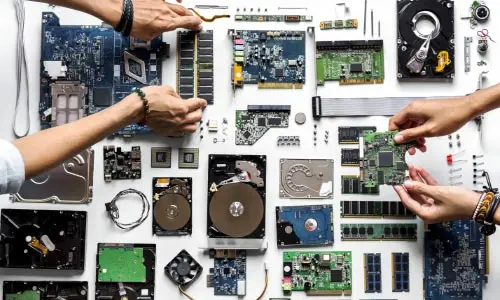
Bolters! If you have even casually glanced at PC prices lately, you will know something strange is brewing in the tech pot. Components that once felt comfortably within reach now come with price tags that make you blink twice, rub your eyes, and mutter a soft but sincere “eish” under your breath. It is not your imagination playing tricks after a long day...
Upgrading a PC used to be something lekker and exciting to look forward to. You planned it, saved a bit of bucks, and eventually treated yourself to a shiny new part that made everything run smoother. These days, even window-shopping feels like emotional preparation. The question on everyone’s mind is simple enough… what on earth happened?
The short answer involves artificial intelligence, big money, and a global hardware tug-of-war that has left everyday gamers standing on the sidelines. The good news is that Thunderbolt Casino remains blissfully unaffected by the madness, and we are more than happy to explain why that matters!
When AI Entered the Room and Ate All the Snacks
Artificial intelligence did not politely knock before entering our lives. It kicked the door open, parked itself on the couch, and immediately asked for more power. From writing tools to image generators, and automated call centres to advanced security systems, AI has become the quiet engine humming behind modern digital life.
What many people do not see is the physical infrastructure supporting all that clever software. AI systems rely heavily on massive data centres filled with specialised hardware designed to crunch numbers at frightening speeds. These machines do not sip electricity or gently share resources. They consume… aggressively.
As AI development accelerated, the demand for high-performance components exploded. Suddenly, graphics cards and memory modules were no longer just gamer toys. They became industrial tools, purchased in bulk by companies with budgets that make consumer sales look like pocket change.
Graphics Cards: From Lekker Upgrade to Luxury Item
Few components have taken the hit as hard as graphics cards. Cards that once sat comfortably in the mid-range category have drifted into pricing territory that feels borderline insulting. Even older models are refusing to drop, stubbornly clinging to values that suggest they are made of gold-plated silicon!
The reason is painfully straightforward. AI workloads thrive on the same strengths that graphics cards offer: parallel processing, fast memory, and relentless throughput. When data centres start buying GPUs by the pallet, retailers stop caring about the oke who just wants to play games after work.
In South Africa, the pain cuts deeper. We are dealing with exchange rate swings, eina import costs, and limited stock availability – this, all piled on top of global demand issues. By the time a card reaches local shelves at Evetech or Computer Mania, the price feels more like a dare than an invitation.
It Is Not Just the GPU, Bolters
While graphics cards steal the spotlight, the rest of the system has quietly followed suit. RAM prices, particularly for newer standards, have crept up steadily, turning what was once an easy upgrade into a heavily considered purchase. Power supplies capable of handling modern systems have also edged upward, as higher-wattage configurations become the norm.
Motherboards with the right features now carry a premium, and even cooling solutions have become pricier as systems demand better thermal management. None of these increases look dramatic in isolation, but together they transform a modest upgrade into a serious financial commitment.
For many players, the result is simple. They delay, they compromise, or they decide that their current setup will have to soldier on a little longer.
Industry Whispers and the Asus Angle
Adding fuel to the fire are industry whispers suggesting that major manufacturers like Asus are exploring deeper involvement in GPU production and AI-focused hardware. While details remain sketchy, the direction is clear enough. The future of hardware development is increasingly shaped by enterprise needs rather than home users like you and I.
This does not mean gamers are being abandoned entirely, but it does mean they are no longer the priority audience. When massive contracts are on the table, catering to individual buyers becomes a secondary concern. Think of it as tenders going out to politicians’ cronies instead, except it’s less skelm.
Relief may come eventually as production ramps up, but who knows when that might be. Some speculate towards the latter part of 2027, but we can’t say for sure! For now, patience is the only sensible approach. Chasing cutting-edge hardware in this climate equates to running uphill in the rain… backwards!
A Shift in How We Play PC Games in South Africa
All of this has quietly changed the way people think about gaming. The idea that every new year demands a hardware upgrade no longer holds water… and if you were hoping for a new GPU in your Krismis stocking, that dream has likely already been shattered!
Instead, players are becoming more selective, more practical, and far less interested in bragging rights. It’s the sensible approach, mense. Whether we like it or not.
Let’s keep things simple and compare a solid, everyday gaming PC that most South Africans were happy with in 2022, versus what that same level of performance costs you now in 2026:
- Graphics Card
In 2022, a dependable mid-range GPU sat around R7,000 – R9,000 and was fairly easy to find.
In 2026, that same performance level now pushes R13,000 – R16,000, often with limited stock to match. - RAM
A standard 16GB kit in 2022 cost roughly R1,200 – R1,600 and felt more than sufficient.
In 2026, 32GB has become the safer baseline, landing closer to R3,500 – R5,000. - Motherboard
Mid-range boards in 2022 averaged R2,000 – R2,800 without much fuss.
In 2026, similar-quality boards hover around R3,500 – R4,500. - Power Supply
A reliable 650W unit cost about R1,500 in 2022.
In 2026, higher power demands push trusted options into the R2,500 – R3,500 bracket. - Bottom Line
A decent gaming PC in 2022 came in around R20,000 if you shopped smart.
In 2026, that same real-world performance now flirts with R30,000 – R38,000.
Naturally, entertainment is now being judged by accessibility rather than raw performance. If something runs smoothly, loads quickly, and delivers a good experience, that suddenly matters more than maxed-out settings and benchmark scores.
This shift plays beautifully right into Thunderbolt Casino’s hands…
Thunderbolt Casino Does Not Care About Your GPU
Thunderbolt Casino is built to perform without demanding anything heroic from your hardware. Our platform focuses on optimisation, stability, and clean design, ensuring games run smoothly on everyday devices – like that phone in your hand – that most people already own.
Slots spin happily on laptops that have seen a few birthdays, and table games load without drama on standard desktops. Even older systems remain perfectly capable of delivering a seamless experience, without fans screaming or systems heating up like a braai on Boxing Day.
This is not accidental, people. It is a conscious design choice made by the gurus behind Thunderbolt Casino software that prioritises players over specs.
Mobile Casino Freedom Changes Everything
Of course, Thunderbolt Casino is not limited to traditional setups. Mobile casino play removes hardware concerns almost entirely, allowing players to enjoy their favourite games on devices already sitting in their pockets.
Modern smartphones handle casino gameplay with ease, offering smooth visuals, responsive controls, and reliable performance. You don’t have to worry about any upgrades, and there are no components to hunt down – which means it’s just a jol, with no stress!
This flexibility suits real life in Mzansi, where plans change, power trips happen, and convenience matters. The ability to switch seamlessly between desktop and mobile play at Thunderbolt Casino keeps entertainment accessible, regardless of circumstances.
AI Is Not All Doom and Gloom
It would be unfair to paint AI as a pure villain in this story. The same technology driving hardware demand also improves online casino platforms in meaningful ways. Smarter security systems, faster issue resolution, and improved fraud detection all benefit from AI-powered tools.
Thunderbolt Casino quietly uses these advancements behind the scenes, enhancing safety and reliability without making players jump through hoops. The tech works for you, not against you, and it does so without demanding expensive equipment on your end.
It is a rare example of balance in a space often dominated by excess.
Choosing Smarter in a Changing Tech World
The world is not slowing down, Bolters. AI will continue to evolve, hardware markets will continue to shift, and prices will likely remain volatile for some time. The smartest response is not chasing every trend, but choosing platforms that respect your reality.
Thunderbolt Casino does not ask you to keep up with Silicon Valley spending habits. It meets you where you are, with what you have, and delivers entertainment without unnecessary friction. We’re ready with our virtual doors wide open for gaming that is convenient and refreshing!
Join Thunderbolt Casino Where We Use AI to Play Smarter, Not Harder!
So next time you see a GPU price that makes your coffee go cold, take a moment to smile. While the tech world wrestles with AI-driven demand and rising costs, while the tech okes argue over chips, supply chains, and billion-rand AI arms races, Thunderbolt Casino is right here doing what it does best… delivering accessible, reliable fun without the hardware headache.
Login to Thunderbolt Casino and enter our world now, whether that’s on a trusty old PC, a mid-range laptop, or your phone! We offer online casino gaming that fits real South African life, not some glossy overseas fantasy. Join NOW… Sharp sharp!